Sunday, 28 July 2013

BugCrowd - A safe, fresh approach to security testing


How does it work?

1. Get started in 30 seconds

The first step is to contact us! We’ll do a brief consultation and help you set the budget, the duration, and which websites or apps you’d like our curated crowd of researchers to test.

2. Then testing begins

The Bugcrowd researchers get to work finding security flaws in your applications. All testing can be routed through Bugcrowd’s Crowdcontrol system, providing control and accountability.

3. We collect the results

Any bugs are submitted to our Secure Operations Centre as soon as they are found. We validate the flaws and, at the end of the bounty, reward the first researcher to find each unique flaw.

4. Full security report

We provide you with an easy to understand report for you to hand to your developers… We can even recommend partners to help you fix what we find!
Here is a chance to win Free Tshirt by subscribing to it: 


Sunday, 21 July 2013

RunKeeper - The Personal Trainer In Your Pocket

Join the more than 20 million people who are using RunKeeper to turn their phone into a personal trainer in their pocket! Track your running, walking, cycling, hiking, biking and more using the GPS in your Android phone.

Track your fitness activities and have fun doing it
- See detailed stats around your pace, distance, time, and calories burned.
- Get stats, progress, and coaching through your headphones with built-in audio cues.
- Listen and control your music during your workout.
- Measure your heart rate with many available sensors (appropriate heart rate zones depend on your weight).
- Take pictures along the way to share and save while you go.
- Update your weight to keep calories burned accurate.
Measure your performance over time
- View a detailed history of your activities (runs, walks, bikes, etc.) to see how you are doing.
- Get notified when you hit new personal bests and milestones.
- Measure your progress against your goals and targets.
- Follow detailed plans to help you achieve specific fitness objectives, like run for weight loss or run a 5K.
- Turn any activity into a route to do again later.
Share with friends
- Post your activity stats (map, distance, calories, and time), fitness achievements and training plans to Facebook, Twitter and your friends on RunKeeper.
- Let supporters watch LIVE maps of your workouts and races as you go (must subscribe to RunKeeper Elite).
Get a broader picture of your health at RunKeeper.com
- Integrate your activity data with more than 70 other apps and services including MyFitnessPal, Lose It, Fitbit, Withings, Garmin and many more, to get deeper insight into your overall health.
- View detailed reports of your tracked activity level, calories burned, weight loss, and many more stats over time.
Track, measure, and improve your fitness with RunKeeper.
Note: Continued use of GPS running in the background can dramatically decrease battery life


Friday, 19 July 2013

Never Wet - A spray product you can use on every surface to make it water and dirt resistant


NeverWet is a Revolutionary liquid and dirt repelling spray for any surface.


NeverWet comes in two parts, a base coat and a top coat. As the above video demonstrates, all you need to do is spray the bottom coat onto your surface, wait for 15 minutes, then apply the top coat and wait the same amount of time.That’s it! The silicon-based spray protects your surface from a majority of liquids, and can be used to coat a surface of around 10 to 15 feet without problems.

Thursday, 18 July 2013

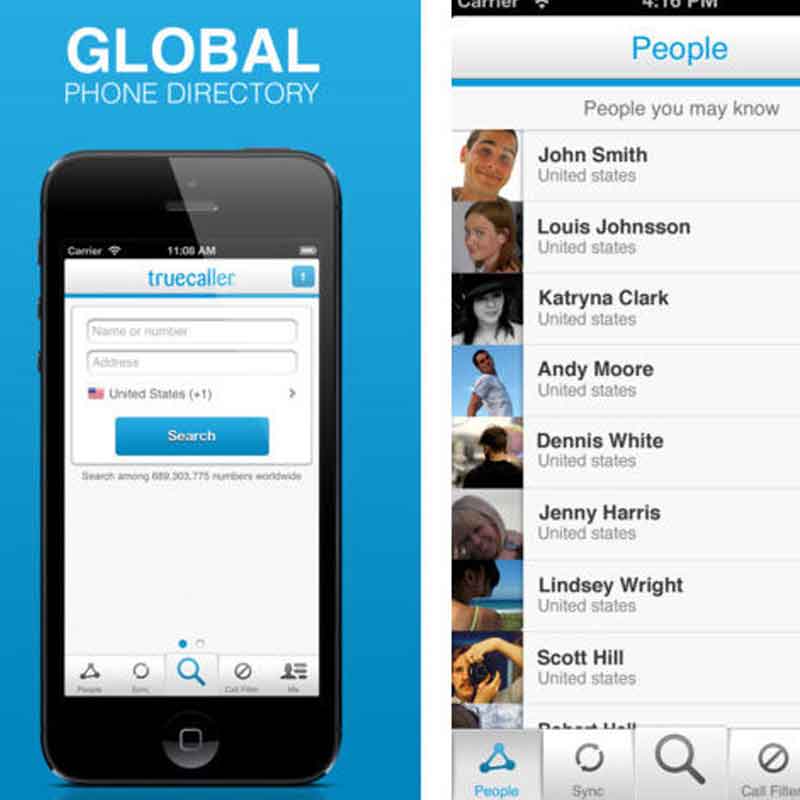
Truecaller database hacked by Syrian Electronic Army

The hackers claim to have data of over a million users with their Facebook, Twitter, LinkedIn and Gmail accounts.


The servers of Truecaller, a service that claims to be the world’s largest collaborative phone directory, seem to have been hacked by hackers representing Syrian Electronic Army. The hackers managed to get away with seven databases including the main database that represents 450GB of data, Ehacking News reports.

The hackers claim to have data of over a million users with their Facebook, Twitter, LinkedIn and Gmail accounts. The extent of data theft is unknown at the moment.

Truecaller works by users agreeing to share their phonebook with the service that lets Truecaller display the name of the caller if it is not saved in the recipient’s phonebook.

It is unclear whether the phonebook database containing names, numbers and other contact details of non-users was accessible to hackers or not.

Sunday, 14 July 2013

'White House Down': What It Takes to Protect the President

Hollywood seems to have the ingredients needed for a blockbuster disaster movie down to a science: lots of explosions, action-packed fight sequences and nefarious criminals laying siege to the government, a city or the world.


This summer's latest action movie, "White House Down," which opens in theaters nationwide today (June 28), certainly follows the tried-and-true formula. But in reality, it takes more than special effects to protect the president; and if anyone knows what it takes to protect the White House, it's Mickey Nelson, who spent 28 years serving in the U.S. Secret Service.
Before his retirement in 2012, Nelson was the assistant director for the Secret Service's Office of Protective Operations, which manages the execution and development of policy related to the agency's protective mission. [Infographic: The History of the US Secret Service]
While "White House Down" may be the work of Hollywood screenwriters, Nelson, who was invited to an early screening, says there are elements of reality in the film. 
"They recreated the East Wing, the West Wing, the Oval Office and the President's limo, and the duplications are unbelievable," Nelson told LiveScience. "Unless you knew you were watching a movie, you would think you are in the White House."
The film's plot centers around a paramilitary group that takes over the White House. A police officer at the U.S. Capitol, whose application to the Secret Service was rejected, must try to rescue the president before it's too late. The movie stars Channing Tatum, Maggie Gyllenhaal and Jamie Foxx.
Since the White House is such a visible and well-known landmark, security officials have to take that into account when establishing security protocols.
"The Secret Service is aware that there could be an attack at the White House, but there are many, many measures in place to not only prevent that, but to respond to it if it ever happened," Nelson said.
For one, Secret Service officials take advantage of a variety of resources to ensure the safety of the president.
"We have a number of overt and covert assets in any venue with the president, or any of the people we protect," Nelson explained. "Sometimes these are very visible — uniformed officers on patrol, armored vehicles, barricades — and other things are more invisible, like some of the technical or tactical measures." 
Regardless of the tools being used, when it comes to security, preparation is key, he added.
"We always want to be a step ahead, where possible," Nelson said. "We employ a variety of technologies to stay proactive, whether that's armoring a vehicle or deploying the latest magnetometers or metal detectors. We also use technology for early detection of chemical, biological, radiological or nuclear threats."
Still, while the rapid pace of technological change has helped the Secret Service hone new security strategies, it can be a double-edged sword, Nelson said. 
"Just as it can be used for you, technology can also be used against you," he explained. "Technology helps us develop countermeasures, like armored vehicles, so the way that we protect the president now has obviously changed, but the main challenges have remained pretty consistent throughout history."
And despite spending nearly three decades serving in the Secret Service, Nelson is still able to sit back and enjoy the action played out on the silver screen.
"I do enjoy them," Nelson said. "There have been a number of Secret Service movies that have been made throughout the years, and I enjoy them very much. I look at them through a very different set of eyes, so I'm probably a lot more critical, but it doesn't keep me from enjoying the movies."


Tiny Modems & Routers Can Be Big Energy Hogs

Today, you can walk into a store and get a nice, big, flat-screen TV that uses one-third the energy of older models and has better features. You can get a powerful 14-inch laptop that uses a lot less energy than a machine built a few years ago — it has longer battery life and an even brighter display. But your high-speed modem and router — those little blinking boxes that you use to stream video, get email and zap a document to your wireless printer — could be eating up as much energy as your TV, and twice as much as your laptop.What a waste.


There's no need for the devices to guzzle power all day and night. Some manufacturers are already using power-scaling technology, which allows the device to use less power when it's just sitting around waiting to receive or send data, without sacrificing speed or convenience. Next year, these efficient modems and routers will bear the blue Energy Star label. You can find them on store shelves, or ask your Internet service provider to swap out your old device for an Energy Star model as part of your subscription package.
When you do so, you'll save money on your electric bill, and help reduce pollution from power plants. On a large scale, replacing old modems and routers with models that are among the 25 percent that are the most efficient in their category would save consumers $330 million on electric bills every year.
All this from a small tweak to a little black box. That's what's so great about energy efficiency — like those unassuming modems and routers, it's so humble, yet such a powerful tool. Energy efficiency puts money back in people's pockets, and it's the cheapest, cleanest, fastest way to reduce g


Friday, 12 July 2013

How Human Brains Could Be Hacked


Like computers, human brains may be vulnerable to hackers. Technology is already allowing scientists to read people's thoughts and even plant new ones in the brain.

"We live a world of data, One day soon, our innermost thoughts may no longer be our own."

Mind reading
Reading people's minds doesn't always require technology. New York psychologist Marc Salem can decipher a person's thoughts using the tiny physical cues in a person's body language. "A scratch of the nose can mean you're lying, or it can mean that your nose itches," Salem told LiveScience. When he's trying to read someone's mind, he looks for what he calls a "packet of signals" that tells him what a gesture means. The show follows Salem as he guesses the cards of professional poker players — a seemingly impossible feat. To do it, Salem relies on context. "I'm able to pick up their nonverbal inflections and cues," he said. "The more I have a context for them, the more I can pick them up."
Of course, technology can give scientists even more direct access to the human brain. Inventor and neurotechnologist Philip Low is developing a portable brain monitor called iBrain that can detect the brain's electrical activity from the surface of the scalp, Freeman explains. People with Lou Gehrig's disease (amyotrophic lateral sclerosis) or other forms of paralysis still have healthy brain activity. Using the iBrain, they could use thoughts to control a virtual hand on a computer screen.


The show later delves into even more sophisticated forms of mind reading. "Some neuroscientists are already translating the language of the brain to plain English," Freeman says. Neuroscientist Jack Gallant at the University of California, Berkeley is compiling a "brain dictionary" to translate thoughts into pictures and words. Gallant and his colleagues showed people different images while measuring their brain activity via functional magnetic resonance imaging (fMRI). From the brain activity, Gallant's team can reconstruct the approximate images people saw. The scientists are also developing a dictionary of concepts that allows them to guess what people are thinking about the images they're seeing.
Mental modification
But these technologies are already raising ethical issues. "We don't know how fast the technology's going to progress," Gallant says. Freeman goes on to explore an even more startling possibility: If thoughts can be decoded, could they also be altered?
For example, imagine if you could turn an amateur into an expert in a single day. This is the mission of neuroscientist and entrepreneur Chris Berka. Athletes, performers or other experts can tap into a state of extreme mental focus, called being "in the zone." The zone state (which amateurs can achieve too) has a particular signature in the brain activity. The neurotech company Berka runs is developing technology to monitor people's brain activity during a task, such as archery, and notify them when they have reached their "peak performance state," aka, the zone. Essentially, the technology gives people the ability to hack into their own brains in order to improve their performance.
But what if other people could hack into a person's brain and plant thoughts there? Computer programmers break into secure systems using "cracks," Freeman says. In humans, sense of smell could be a crack for the brain. Ilana Hairston, a psychologist at The Academic College of Tel-Aviv Yaffo in Israel, uses smell to plant information in people's brains while they sleep. She trains snoozing people to associate certain pleasant or foul odors with particular sounds. The notion sounds like sci-fi, but it relies on a brain pathway that allows senses like smell to enter the brain without conscious awareness.
On the show, Freeman explores all of these mind-probing efforts with his characteristic gravitas. Many of the methods described aim to restore or improve human abilities. But some imply a future that is spooky indeed.


The Titanic: Facts About the 'Unsinkable' Ship


When it was built, the Titanic was the largest moving human-made object in the world. It had many new features, including remotely sealable compartments that led to it being deemed "unsinkable." Alas, it was not.
About the ship
The RMS Titanic was built by the White Star line, which was a competitor to another shipbuilding company, Cunard. In 1907, Cunard made major waves by building the Lusitania and the Mauretania, which set speed records crossing the Atlantic. To compete, White Star Line decided to build several large vessels known for their comfort instead of their speed, according to the Encyclopedia Britannica: the Olympic, the Titanic and the Britannic.
The Titanic was completed in 1912 at a cost of $7.5 million in Belfast, Ireland (although nowadays it's Northern Ireland). It took more than two years to build, and two workers died during its construction. The ship was 882 feet (270 meters) long, or more than four city blocks, and more than 92 feet (28 m) high. It weighed an incredible 46,000 tons. [Titanic Quiz: Fact or Fiction]
The Titanic began its journey in Southampton, England, and then sailed to Cherbourg, France, and Queenstown, Ireland (now known as Cobh). It sped west toward New York on April 10. It was carrying a total of 1,316 passengers and 885 crew members, according to the Encyclopedia Titanica. The people were a mixture of wealthy individuals as well as immigrants from Ireland, Germany and elsewhere.
On April 14, a nearby ship, the Californian, sent a message at 10:55 p.m.: "Ice report: We are stopped and surrounded by ice." But the captain of the Titanic, Edward Smith, and First Officer William Murdoch did not heed these warnings, steaming ahead near full-speed.


The known route of the Titanic and a possible route of the iceberg.
Sinking of the Titanic
At 11:40 p.m. ship's time, watchmen aboard the ship spotted an iceberg, and the ship made a sudden turn to the left, causing it to sideswipe the iceberg. The ice punched holes in the starboard (or right side) of the boat, along a nearly 300-foot (90 m) stretch and it began filling it with water. Six of the ship's 16 water-tight compartments started filling. But this was enough to make the ship begin to sink into the water, at which point the water flowed of the top of these compartments (the "transverse bulkheads") and begin filling the other compartments. Modern estimates suggest that the boat could have possibly limped to shore with only four breached compartments. [Video: How Exactly Did Titanic Sink? - With James Cameron ]
With six compartments leaking, however, the Titanic's fate was sealed — it had lost too much buoyancy to remain afloat, and the fact that it was a well-built and durable ship at this point made little difference. That said, the ship didn't sink for almost three hours, longer than Titanic's engineer gave it — when he heard that six compartments were leaking, he predicted it would only stay afloat for 1 to 1.5 hours, said Titanic expert Parks Stephenson. Contrary to some studies that say the Titanic had weak rivets, it was actually quite strong for its time, Stephenson said.
As the front filled with water and sunk into the ocean, the back of the ship lifted out of the water, according to analysis by James Cameron and eyewitness accounts. This placed tremendous pressure on the middle of the boat. It eventually cracked and the front of the ship crashed back into the ocean; the ship sank at 2:20 a.m. on April 15.

Why did the Titanic sink?
Many have speculated as to what led the Titanic to hit the iceberg. Stephenson said there was likely at the time an atmospheric effect called a "cold air mirage," which is relatively common in the North Atlantic, and helped prevent the crew from seeing the iceberg until too late. This effect may have also prevented nearby ships from seeing the Titanic's warning flares, or from discerning that they were signals of distress.
A ship called the Californian was nearby, likely within less than 20 miles (37 kilometers) of the, and was singled out for scrutiny for not responding to the Titanic's distress signals. But the ship had retired for the night, and its wireless system was turned off. The captain of the ship claimed that the flares his officers saw weren't thought to be distress signals. But it's unclear exactly why the Californian didn’t respond and continues to be a matter of some debate, Stephenson said.
The Titanic carried only 16 lifeboats as well as four "collapsibles," which in total could only accommodate a third the Titanic's total passengers had the ship been fully filled. As it was, it could have only accommodated half the passengers aboard. While this may seem unforgiveable by today's standards, the Titanic actually carried more lifeboats than necessary under the law at the time. In the aftermath of the sinking, laws were put in place to prevent this from happening again and required ships to carry more lifeboats.
Titanic passengers and survivors
All of the Titanic's survivors were rescued by the Carpathia, which received the Titanic's distress signal and immediately set off toward the Titanic. It didn't get there until about 4 a.m., however.
Of the 2,224 people on board, 1,514 lost their lives, while 710 survived. First-class passengers fared much better than those in third class. For example, only 3 percent of first-class women died, whereas 54 percent of third class women perished.
Some of the Titanic's passengers were prominent people, including John Jacob Astor IV, one of the wealthiest men in the world at that time. So were Ida and Isidor Straus, who was the co-owner of Macy's department store. And of course, there was "Unsinkable" Molly Brown, a socialite who became famous when she exhorted her lifeboat to return to look for survivors, and ultimately survived the ordeal herself.
Astor didn't survive, as he didn't take seriously the reports that the ship was sinking, and later wasn't allowed onto a lifeboat due to a "women and children first" policy. (His pregnant wife did survive, however.) Ida Straus initially boarded a lifeboat but returned to her husband. "Where you go, I go," she reportedly said. The couple would die together. (He was 67, she was 63.)
The wreck of the Titanic was discovered by Bob Ballard on Sept. 1, 1985. He used his underwater craft called Argo to follow a trail of debris to the ship's hull.


Thursday, 11 July 2013

Can Facebook Predict Suicide Risks?

If you've been thinking about killing yourself, your social media might give you away. An initiative called the Durkheim Project will use artificial intelligence (AI) algorithms to identify common words and phrases among those who might be contemplating suicide.

The program, which launched on July 2, currently targets only veterans, who have disproportionately high suicide rates. Veterans opt into the Durkheim Project, which installs an app on computers, iOS and Android devices. These apps keep track of what users post and upload it to a medical database. A medical AI monitors the data in real-time, picking out patterns that might lead to self-harm.

The Durkheim Project app monitors content from Facebook, Twitter and LinkedIn, in addition to storing information from a user's mobile device. A database at the Geisel School of Medicine at Dartmouth University will keep track of users' locations and text messages, and will not share any information with third parties. Additionally, the system will be guarded by a firewall to ward off would-be hackers.

"The study we've begun with our research partners will build a rich knowledge base that eventually could enable timely interventions by mental health professionals," said Chris Poulin, principal investigator on the project, in a statement. "Facebook's capability for outreach is unparalleled."

This project has a dark side, however: While future versions of the app may notify professionals if an individual appears to be at risk for harmful behavior, its current version is completely noninterventional. Since veterans commit suicide far more often than the general populace, the Durkheim Project may gain some of its most valuable data by tracking active social media users who go on to kill themselves.

The research rests on solid ground. Poulin and a team of investigators ran the program's first phase in 2011, which examined social media from veterans who were active online. The findings were telling: more than 65 percent of users who went on to commit suicide employed key words or phrases on a regular basis on their social media accounts..

The Durkheim Project may not achieve its long-term goal: The program requires users to opt-in, and those who feel suicidal may not feel inclined to reach out for help. Additionally, the original study only tracked correlation: There's no indication that veterans who post negative statuses necessarily go on to kill themselves.

Even so, a project hoping to reduce suicide among veterans is a noble goal, and the Durkheim Project welcomes anyone who wants to help. Through cooperation among mental health professionals and technology experts, a veteran's social media page could be much more than a collection of sad statuses leading to his or her untimely death.


Wednesday, 10 July 2013

Solar Head-Phones That Can Charge Mobiles Invented


One of the most distressing things about smartphones is the battery. There have been many speculations about harnessing solar power to charge and run smart-phones but it has so far remained to be stuff of science fiction. However, looks like the dream to power your smartphone with solar energy has finally come true. 


And what’s better? The “charger” is nothing but your headphones! So that means mobiles can be charged using solar energy on the go. 

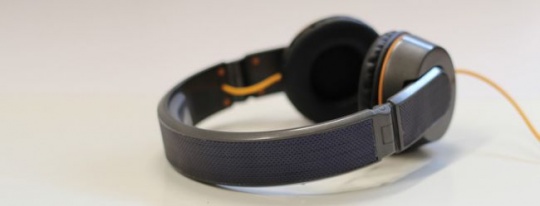
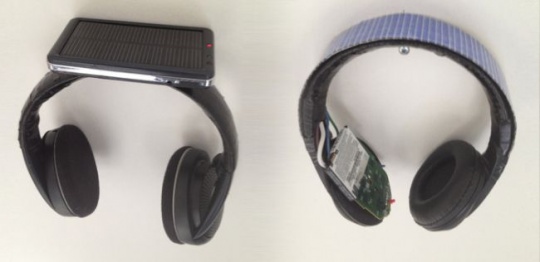
Designed by a firm in the UK, the head-phones harness solar energy to power smartphones and gadgets while on the move. The head-phones which can be worn as a band around the head come fitted with solar panels which use 0.55 watts of power for charging. The solar-cell is flexible so the headphone can mould to different head-shapes easily, just like regular headphones. 

The energy thus generated will be stored in two lithium-ion batteries behind the ear-cups. The batteries will be light-weight and will also help balance out the weight of the headphones. The headphones feature a lightweight and fully adjustable folding headband with custom developed ear-pads to ensure a comfortable fit for hours of gaming and music.

Designed by Andrew Anderson, the device has been named ‘On-Beat’ headphones and have been launched as a pilot project. The project is already up on kick-starter and are expected to go on sale sometime in 2014. Talking of the project, Anderson said, "The headphones have an integrated flexible solar cell that covers the full headband which capture solar energy whilst out and about.” 


What about the quality of the head-phones? Will the quality be comprised in a bid to double up the head-phones as a charger also? On Kick-starter Anderson says, “From the offset we not only wanted to develop a product to keep your devices going all day, but a product that would give you a superb sound from low range for bass, mid-range for precision DJ'ing and high range for vocal and acoustic excellence. The headphones also have an integrated remote for controlling the volume of the music in your ears. “

Additionally, the headphones can also be charged via USB cord in times of low-sunlight or during the night. While Anderson requires about 200,000 pounds to begin production and the project on Kickstart is already buzzing. Priced at a little over 100 pounds, the headphones are definitely expensive. But think up on all the electricity bills you’ll save and the head-phones seem like a sound investment!


MIT Researchers Build All-Optical Transistor - The Future of Quantum Computers

The use of light instead of electricity in doing calculations is a method known as optical computing. It creates a substantial difference between conventional computers and the quantum computers. Through optical computing, hypothetical devices can make special types of computations that are incredibly faster than the good old classical computers.


However, optical computing needs light particles such as photons in order to modify their behavior. This is something that may be hard to achieve and the reason is quite simple. When two photons collide in a vacuum, they tend to just pass through each other.
Researchers from the Massachusetts Institute of Technology (MIT) Research Laboratory of Electronics, Vienna University of Technology, and Harvard University collaborated to figure out how to manipulate the behavior of the photons in which they were able to create an optical switch which can be controlled by a single photon thus governing light transmission. It is then referred to as a transistor’s optical analog which is the main component found in a computing circuit.
The result of their study was published on an online journal Science.
Additionally, quantum physics and its strange, counterintuitive effects are more visible in individual particles as compared with those that are in clusters. Hence, the use of a single photon when flipping the switch could come in handy for quantum computing.
The heart of the above-mentioned switch is made up of a pair of mirrors that are highly reflective. If the switch is turned on, there is an optical signal or a beam of light that passes through the mirrors. If the switch is turned off, the light that passes through is reduced by 20 percent.
The two mirrors are used as optical resonator. Vladan Vuletic, MIT’s Lester Wolfe Professor of Physics, explains in the report that when there’s only one mirror, all the light that passes through would just come back. On the other hand, something weird happens when you use two mirrors instead of one. The distance between these two mirrors should be exactly calculated to the wavelength of the light. When the right wavelength is achieved, the mirrors suddenly become transparent to light.
The main advantage of optical computing is power management. The amount of consumed energy in computing devices is something that we shouldn’t ignore. The biggest advantage of switching in the single-photon level is the energy that is saved in every bit. The bit is naturally included in one single photon.
Vuckovic believes that the result of their study may be used in the enhancement of computer chips which may result to faster computers with longer battery life.


Saturday, 6 July 2013

Microsoft develops 3D touchscreen

It includes an LCD flat panel screen with force sensors and a robotic arm that moves it back and forwards and by controlling how much resistance there is to a user's fingertip the device can simulate the shape and weight of objects shown on screen, BBC reports.

Software giant Microsoft has reportedly developed a 3D touchscreen that shows images which can be felt and manipulated.

It includes an LCD flat panel screen with force sensors and a robotic arm that moves it back and forwards and by controlling how much resistance there is to a user's fingertip the device can simulate the shape and weight of objects shown on screen, BBC reports.

According to the report, Microsoft said that the device can have both medical and gaming uses.

Senior researcher Michael Pahud said that when the finger pushes on the touchscreen and the senses merge with stereo vision, if convergence is done correctly and visuals are updated constantly so that they correspond to the finger's depth perception, it will be enough for the brain to accept the virtual world as real.

The report said that the company has created a demonstration using magnetic resonance imaging (MRI) scans of a brain to show how a medic could navigate through the different slices by pushing their finger against the display allowing them to draw notes and leave a ‘haptic detent’, or force-feedback marker - at certain layers to make it easier to find them again later on.

Pahud said that the ‘haptic detent’ can be extended to flag up potential problems is encountering an anomaly like a tumor, because one can change the response based on what they touch.

Dr Peter Weller, head of the Centre for Health Infomatics at City University, London, is concerned that Microsoft's screen would not be able to give an accurate enough indication of textures because if it was going to be used in the real world it would have to respond to rapidly changing shapes.

Weller further said that if technology like Tactus, which has developed a screen with tiny channels of fluid which allows bumps to pop up to simulate the feel of button, is combined with Microsoft’s innovation it could prove useful for a doctor to do teleconsultancy work adding that it would mean the patient could be in another country or hospital and the doctor could feel their glands or abdomen from a distance, the report added.


Superman-like X-ray vision now a reality through Wi-Fi technology

We could all now have Superman-like X-ray vision - thanks to researchers at MIT’s Computer Science and Artificial Intelligence Laboratory.


Researchers have long attempted to build a device capable of seeing people through walls. However, previous efforts to develop such a system have involved the use of expensive and bulky radar technology that uses a part of the electromagnetic spectrum only available to the military.

Now a system being developed by Dina Katabi, a professor in MIT’s Department of Electrical Engineering and Computer Science, and her graduate student Fadel Adib, could give all of us the ability to spot people in different rooms using low-cost Wi-Fi technology.

“We wanted to create a device that is low-power, portable and simple enough for anyone to use, to give people the ability to see through walls and closed doors,” Katabi said.

The system, called “Wi-Vi,” is based on a concept similar to radar and sonar imaging.
But in contrast to radar and sonar, it transmits a low-power Wi-Fi signal and uses its reflections to track moving humans. It can do so even if the humans are in closed rooms or hiding behind a wall.

To do this, the system uses two transmit antennas and a single receiver.

The two antennas transmit almost identical signals, except that the signal from the second receiver is the inverse of the first.

As a result, the two signals interfere with each other in such a way as to cancel each other out.
Since any static objects that the signals hit — including the wall — create identical reflections, they too are cancelled out by this nulling effect.

In this way, only those reflections that change between the two signals, such as those from a moving object, arrive back at the receiver, Adib said. 


Thursday, 4 July 2013

Microsoft's 'MoodScope' Phone Software Senses Your Mood

IDG News Service — your phone is there, always watching. It's your life companion, according to one manufacturer. So shouldn't it be able to tell your mood, too? Microsoft thinks so.
In a research paper, Microsoft said that by analyzing phone calls, texts, the browser history, and other common smartphone interactions, a new MoodScope service it developed could accurately predict the user's mood 93 percent of the time after a two-month period. This was after the phone was "trained" to sense the user's mood.
So what good is it? After all, you don't need your phone to tell you how you feel. Instead, the idea is that your phone's new "mood sensor" will tell others how you feel--social networks, your friends, even your mom.
Furthermore, that information could be passed along to services like Spotify, which could curate an emo-weighted playlist for when you're down in the dumps. Microsoft even created a "MoodScope social-sharing application" to share user’s moods to their Facebook Timelines.
Yes, this is for oversharers. Microsoft isn't proposing that all phones should sense your mood, automatically, but that it would be based with an app and tapped into via an API.
Somewhat ironically, researchers have never tested the technology with a Windows Phone; they used a combination of Android phones and iPhones for the study, using 32 participants from the United States and China.
"We foresee mood inference as a vital next step for application context-awareness," wrote Robert LiKamWa, Yunxin Liu,A Nicholas D. Lane,andA Lin Zhong, the co-authors of the study. All, except for Rice University's Zhong, worked for Microsoft Research. "Such inference would improve the utility of the smartphone and lower the social barrier for sharing mood."
How does it work?
Specifically, the researchers used SMS, email, phone call, application usage, web browsing, and location to determine mood, defined as a persistent emotional state, rather than flashes of one emotion or another. Microsoft naturally used both the phone and a cloud service to collaboratively produce its MoodScope responses.
What the researchers found is that determining mood wasn't easy; they first had to ask the users to record what their moods were every four hours, and use that to determine a general mood model.
Over time, however, the general mood model cut down the training time to about ten days, during which moods were sensed with 72 percent accuracy.
The paper does not draw any specific conclusions about how smartphone use is tied to mood, such as happy users frequently accessing their phones. But the paper does conclude that phone calls, certain categories of applications, and locations are often tied to a pleasurable mood.

As academic papers often do, the authors are conservative in their conclusions, noting avenues for further research--such as, for example, rises in frustration levels tied to heavy traffic.
MoodScope sound innocent enough. But also keep in mind that gauging emotional response is a key component of assessing the effectiveness of advertising. In 2012, Microsoft filed for this patent on using sensors to assess emotion --imagine that a Web page that knew you were sad might target you for an ad pushing comfort food, for example.
Yes, mood and emotion are two different things, as the paper points out. But there's always a tradeoff; on one hand, knowing your mood may provide better recommendations for music and other services. But they can also be used against you.


Vulnerability Allows Attackers to Modify Android Apps Without Breaking Their Signatures

IDG News Service — a vulnerability that has existed in Android for the past four years can allow hackers to modify any legitimate and digitally signed application in order to transform it into a Trojan program that can be used to steal data or take control of the OS.
Researchers from San Francisco mobile security startup firm Bluebox Security found the flaw and plan to present it in greater detail at the Black Hat USA security conference in Las Vegas later this month.
The vulnerability stems from discrepancies in how Android apps are cryptographically verified, allowing an attacker to modify application packages (APKs) without breaking their cryptographic signatures.
When an application is installed and a sandbox is created for it, Android records the application's digital signature, said Bluebox Chief Technology Officer Jeff Forristal. All subsequent updates for that application need to match its signature in order to verify that they came from the same author, he said.
This is important for the Android security model because it ensures that sensitive data stored by one application in its sandbox can only be accessed by new versions of that application that are signed with the original author's key.
The vulnerability identified by the Bluebox researchers effectively allows attackers to add malicious code to already signed APKs without breaking their signatures.
The vulnerability has existed since at least Android 1.6, code named Donut, which means that it potentially affects any Android device released during the last four years, the Bluebox researchers said Wednesday in a blog post.
"Depending on the type of application, a hacker can exploit the vulnerability for anything from data theft to creation of a mobile botnet," they said.
The vulnerability can also be exploited to gain full system access if the attacker modifies and distributes an app originally developed by the device manufacturer that's signed with the platform key -- the key that manufacturers use to sign the device firmware.
"You can update system components if the update has the same signature as the platform," Forristal said. The malicious code would then gain access to everything -- all applications, data, accounts, passwords and networks. It would basically control the whole device, he said.
Attackers can use a variety of methods to distribute such Trojan apps, including sending them via email, uploading them to a third-party app store, hosting them on any website, copying them to the targeted devices via USB and more.
Some of these methods, especially the one involving third-party app stores, are already being used to distribute Android malware.
Using Google Play to distribute apps that have been modified to exploit this flaw is not possible because Google updated the app store's application entry process in order to block apps that contain this problem, Forristal said. The information received by Bluebox from Google also suggests that no existing apps from the app store have this problem, he said.
However, if an attacker tricks a user to manually install a malicious update for an app originally installed through Google Play, the app will be replaced and the new version will no longer interact with the app store. That's the case for all applications or new versions of applications, malicious or non-malicious, that are not installed through Google Play, Forristal said.
Google was notified of the vulnerability in February and the company shared the information with their partners, including the members of the Open Handset Alliance, at the beginning of March, Forristal said. It is now up to those partners to decide what their update release plans will be, he said.
Forristal confirmed that one third party device, the Samsung Galaxy S4, already has the fix, which indicates that some device manufacturers have already started releasing patches. Google has not released patches for its Nexus devices yet, but the company is working on them, he said.
Google declined to comment on the matter and the Open Handset Alliance did not respond to a request for comment.
The availability of firmware updates for this issue will differ across device models, manufacturers and mobile carriers.
Whether a combination of device manufacturers and carriers, which play an important role in the distribution of updates, coincide to believe that there is justification for a firmware update is extremely variable and depends on their business needs, Forristal said. "Ideally it would be great if everyone, everywhere, would release an update for a security problem, but the practical reality is that it doesn't quite work that way, he said."
The slow distribution of patches in the Android ecosystem has long been criticized by both security researchers and Android users. Mobile security firm Duo Security estimated last September, based on statistics gathered through its X-Ray Android vulnerability assessment app, that more than half of Android devices are vulnerable to at least one of the known Android security flaws.
Judging by Android's patch distribution history so far, the vulnerability found by the Bluebox researchers will probably linger on many devices for a long time, especially since it likely affects a lot of models that have reached end-of-life and are no longer supported.


The Future of Civil Disobedience Online

                        
Familiar political tools like petitions, fundraisers, mass letter-writing, call-in campaigns now have online equivalents. But what about protest tactics like street marches, picket lines, sit-ins, and occupations? Where is the room on the internet for civil disobedience?
In the offline United States, civil disobedience is widely respected as a valid form of political activism. It also has a widely recognized form. Indelible images of Rosa Parks, lunch counter sit-ins, and street marches from the 1950s and 60s civil rights era established what civil disobedience looked like. Civil disobedience looked like an embattled minority bravely standing up in face of clear injustice. It looked like people taking a stand with their bodies and their identities, and often getting arrested.
This pattern of public, performative defiance of injustice, followed by arrest, has become part of the recognized script for political activism in the United States. It's how we expect activism to happen: on the streets, in public, where everyone can see your face. Adhering to a recognized script is essential to political activism that is reliant on the attention of the media to be effective.
But today, civil disobedience often looks very different. Networked technologies mean our opportunities for effective political activism have increased exponentially. Where activists once put their physical bodies on the line to fight for their causes, online activists can engage in digitally-based acts of civil disobedience from their keyboards. There are three major lines along which digitally-based civil disobedience is developing: disruption, information distribution, and infrastructure. Each has its own particular challenges and benefits.
Disruption
Disruptive tactics like distributed denial of service (DDOS) actions and website defacements have a fairly long history in internet terms. Activists groups like the Electronic Disturbance Theater, the Strano Network, pro-Palestinian groups, and many others used DDOS and website defacements in their campaigns as early as the mid-1990s. These tactics aim to upset the status quo by disrupting the normal flow of information, thereby attracting attention to their cause and message.
Disruptive tactics are focused on the public: they aim to deliver their message to as many people as possible, either through exposing them to the disruption and dissent, recruiting them to take part, or both. To be effective, this type of civil disobedience needs to attract the attention of masses of people, typically through the mainstream media. If the media doesn't recognize or cover the actions as acts of protest, then the activist message will fall flat. (If an activist defaces a corporate website, and no one sees it, does it have political impact? Probably not.)
Information Distribution
Information distribution-based tactics are built around the acquisition and release of hidden or secret information. In the past three years, we've seen this kind of protest take the form of whistleblowing, information exfiltration, doxxing (posting the names and personal information of targets online), and crowd-sourced vigilante investigations. These tactics are used by groups like Wikileaks and Anonymous. The idea is to move information from states of low visibility to high visibility, putting injustices in the public eye when traditional law enforcement avenues seem to have failed.
Anonymous has been developing crowd-sourced vigilante investigations in the US and Canada with Steubenville, #JusticeforReteah, and other ops. ""Human flesh search"" message boards are already popular in China, giving netizens the chance to bring formerly untouchable corrupt officials to justice. The FindtheBostonBombers subreddit was a home-grown example of this kind of crowd-sourced vigilante investigation. The goal of this class of tactics is to empower people to take action by adding to the information landscape.
Whistleblowers and leakers rely on the cooperation of the mainstream media to publicize, contextualize, and analyze the information they release. However, this may become easier as more news organization recognize open paths for whistleblowers and leakers. Wikileaks' five media partners for the Cablegate documents, the New Yorker's Strongbox program, and theGuardian's extensive work with NSA whistleblower Edward Snowden are all examples of how cooperation between whistleblowers and news organizations is growing.
Infrastructure
Infrastructure-based activism involves the creation of alternate systems to replace those that have been compromised by state or corporate information-gathering schemes. In other words, if the government is snooping on the internet, activists build a tool to make it harder for them to see everything. Tor, Diaspora, and indenti.ca are some examples of these projects, as are the guerrilla VPNs and network connections that often spring up to serve embattled areas, provided by activists in other countries.
Similar to living off the grid, these projects provide people with options beyond the default. Open source or FLOSS software and Creative Commons use a similar tactic: when the system stops working, create a new system. The challenge is to bring these new systems into widespread use without allowing them to be compromised, either politically or technically. However, these new systems often have to fight network effects as they struggle to attract users away from dominant systems. Diaspora faced this issue with Facebook. Without being able to disrupt dominant systems, user migration is often slow and piecemeal, lacking the impact activists hope for.
Illustration by Osmont2
Disruption, information distribution, and infrastructure tactics and strategies are often practiced by separate groups working independently on different issues. Sometimes disparate group interests will overlap, as when Anonymous launched the disruptive Operation Payback in support of Wikileaks during Cablegate, but there is little inter-group organization.
As the practice of civil disobedience develops online, those who favor different styles of activism but who are united in a common cause may begin organizing themselves into affinity group-style coalitions, building alliances for more effective activism. Effective digitally-based civil disobedience needs a diverse, integrated repertoire of contention to draw from. A disruptive action targeting Facebook could drive users towards alternate, more open, social networking services. A leak detailing government intelligence abuses could spur disruptive protests, consumer flight to uncompromised services, or further leaks.
On the street, activists at major events like political conventions or meetings of groups like the WTO or G8 often use a variety of tactics to provide support within affinity groups, and to make it harder for protest to be neutralized by law enforcement. Street marches are counter balanced by occupations and lock-ins. Posters and pamphlets will be augmented by street art, puppets, and ad hoc street theater. Jail solidarity actions are helped by speeches on the courthouse steps. Though one action may get shut down, others can still make an impact. Digital activists will want to emulate this coalition-building in online spaces too.
As digital activism develops, civil disobedience will continue to a be vital tool for expressing dissent. The internet could be the tomorrow's best zone for free speech and activism, a place where protesters can challenge structures of power that threaten human rights and freedoms. The future of digital civil disobedience will grow out of new online tactics, augmented by the internet's ability to bring people together across geographical boundaries.

Protest in the information age may not look exactly like Rosa Parks on that bus half a century ago. But it will still carry on our ongoing struggle to change the world for the better, and to bring justice to the oppressed.