Wednesday, 30 July 2014

Water Tricks - You will be amazed

Water reflection science: Light refracts or bends when it passes from one material to another. It also acts like a magnifying glass, bending the light towards the center.

Pepper and soap: Due to surface tension, the pepper floats on top. The soap interferes with the hydrogen bond between water molecules, breaking the surface tension. Naturally, water molecules are strongly attracted to each other. So when the surface tension breaks, the water spreads out. It’s attracted to the outside water molecules, making it spread out and taking the pepper particles with it.
Tell us the science behind the rest :)

Center of gravity tricks

Three nice tricks to impress your friends at parties. Or win some bets.

Tuesday, 29 July 2014

Top 10 Mind Hacks To Help You Save More Money


You already know the common strategies for saving money: Automatically set aside a portion of your paycheck, stick to a budget, plan your purchases, and so on. But there are also simple (if surprising) psychology tricks that can help us save even more. Here are ten such mind hacks.

10. Visualize What You'll Look Like When You're Older to Save More for Retirement

Top 10 Mind Hacks To Help You Save More Money
Many of us aren't saving enough for retirement, perhaps because we think of it as so far away. Research, however, shows that one really simple way to help us reach our retirement goals is to picture our lives or what we might look like years or decades from now when we're retired.

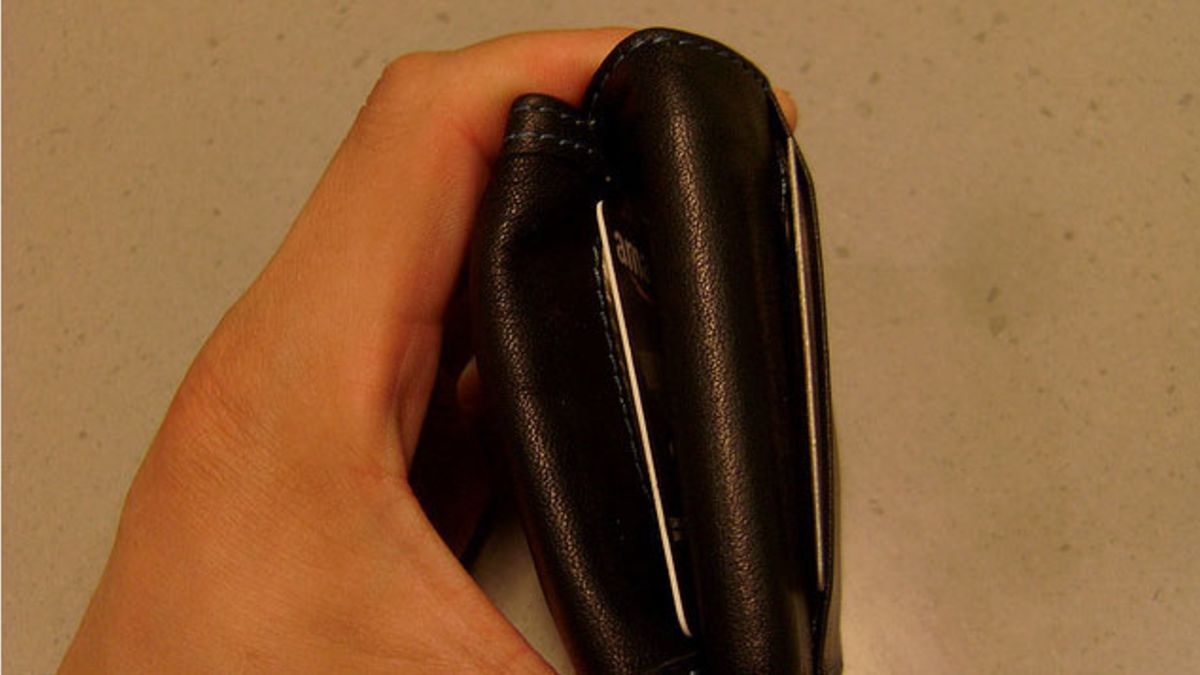
9. Create a Sleeve for Your Credit Card with a Picture of Your Financial Goal

Top 10 Mind Hacks To Help You Save More Money
Similar to putting a motivational photo on your fridge if you're dieting or above your desk if you want to be more productive, this trick from the Simple Dollar can remind you of the bigger money goals you have every time you reach for a credit card to pay for a trivial purchase.

8. Chew Mint Gum and Wear Headphones While Shopping

Top 10 Mind Hacks To Help You Save More Money
What do gum and headphones have to do with shopping or saving money? It's all about the ways stores manipulate your senses to trick you into buying more. Chewing mint gum couldcounteract the ambient scents in stores and make you feel fuller so you don't buy food impulsively, and wearing headphones could block out the music designed to make you stay in the store longer. By knowing how stores try to seduce you while you're shopping, you can defend yourself from their tricks.

7. Price Items Based on How Many Hours You'd Need to Work to Pay for It

Top 10 Mind Hacks To Help You Save More Money
You know what will really put a damper in unnecessary spending? Thinking about how much that item really costs in terms of hours you'd need to work to pay for it. $90 for a pair of jeans?! That's more than 12 hours of work at the $7.25 minimum wage. (Even if you're paid twice that, still more than half a day of work.)

6. Override Your Bad Money Behavior with a New Mantra

Top 10 Mind Hacks To Help You Save More Money
Set up rules of thumb—or heuristics—that describe the way you want to treat your money and over time it could become second nature. For example, "I only buy clothes when they're on sale" versus "I deserve to treat myself whenever I get a windfall." No, you don't have to repeat the mantra over and over (maybe just change your password to it temporarily), but if you adopt it, the mantra could trick your brain into overcoming bad money habits.

5. Instead of Trying to Save More Money Now, Commit to Saving More in the Future

Top 10 Mind Hacks To Help You Save More Money
It sounds counterintuitive to save more money by not saving more money, but it's all about the timingResearch suggests that starting a program where you're steadily increasing the amount you save could be more effective than making an effort to save a lot more now. For example, making a plan to save most of your next raise rather than trying to cut back now. (Of course, you should then stick to that plan.)

4. Change the Way You Use Certain Dollar Denominations

Top 10 Mind Hacks To Help You Save More Money
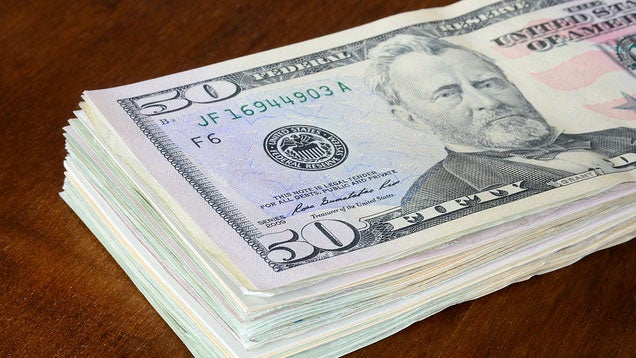
There's nothing inherently different between a fifty dollar bill and some tens and fives, but psychologically, we might be more reluctant to break the larger bill. You might even be more prone to hold onto $2 bills, since they're seen as scarce (but really aren't). And, like the jars of spare coins that get filled daily and turn into a couple of hundred dollars at the end of the year, saving every $5 bill that comes into your possession can turn into significant savings, almost painlessly.

3. Curb Impulsive Spending with a Few Tricks

Top 10 Mind Hacks To Help You Save More Money
You can't always rely on self-control to avoid temptation, which is always around us. You can, however, make it harder for you to push the buy button or swipe the credit card without thinking first. For example, don't store your credit card information with online stores or autofill data, train yourself to always ask before buying anything if you'd rather have the cash if a stranger offered it to you, stick to the 30-day rule to make sure you really want something, or use a prepaid debit card to force yourself to ponder your limited resources.

2. Make Saving Money Fun

Top 10 Mind Hacks To Help You Save More Money
Saving? Fun? That's where gamification comes in. Tools like SaveUp and SmartyPig turn saving money a kind of challenge where you can watch the your money grow (and reap other rewards). Or you could join a challenge like the 52 Week Money Challenge or similar to push yourself to save more (and even enjoy it).

1. Understand Your Brain's Biases

Top 10 Mind Hacks To Help You Save More Money
Finally, the more you know about how your own brain may be sabotaging your shopping choices, the better you can take back control and overcome your brain's mushy mental accounting

What you need to know about card skimming


http://krebsonsecurity.com/
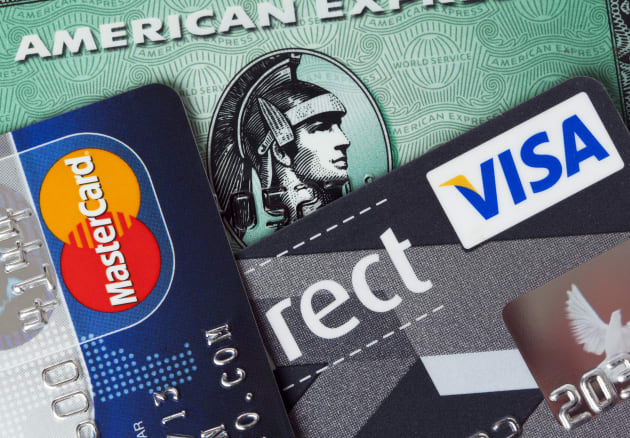
"Skimming" is a blanket term used when referencing a crime where you take small amounts of money. It literally means to take cash off the top, as if money were the sweet cream floating atop a cauldron of lesser riches. Fifty years ago, skimming might have meant stealing a handful of dollars from your employer, or even millions in elaborate scams we've seen in countless Hollywood films. Today's skimming, however, employs tricks and hardware that are absurdly complex and yet sneaky enough to elude detection. Unless you know what to look for, of course. Today's world of skimming is high-tech, and it wants your credit card and banking info.
Though we can't help you catch every conceivable method that crooks are using to try to rip you off, being armed with a bit of knowledge on the topic could save you major hassle down the road. No matter what you take away form this read, at a minimum you'll never look at an ATM or POS terminal the same way again.

WHAT IS IT?

Latest ATM skimming device, clever and terrifying at the same time /via Twitter

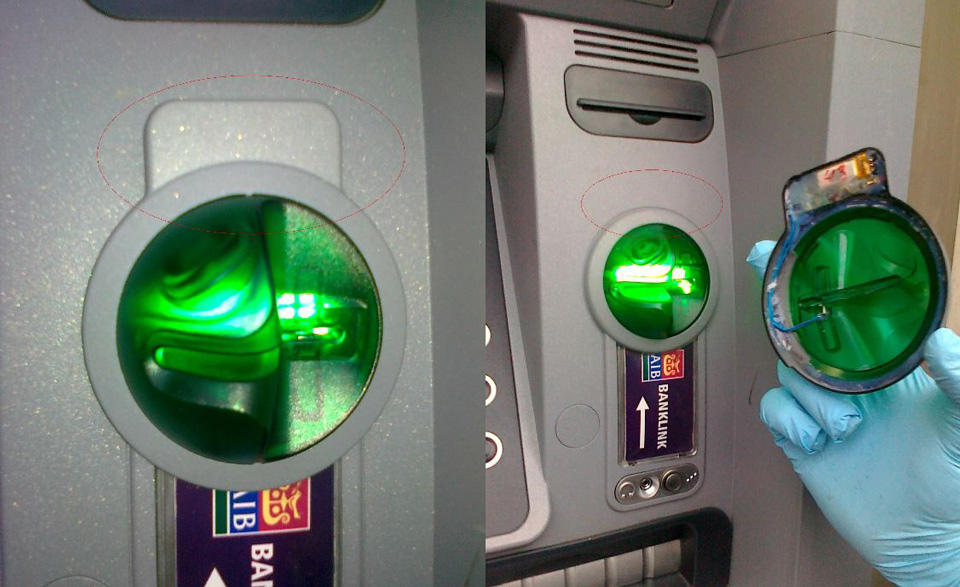
A skimmer in the ATM world usually features two important pieces of hardware: A micro camera positioned within eyesight of the keypad, and a magnetic card reading device that captures your card's details. To "clone" -- duplicate -- your card, this is all the info a would-be thief needs. The scenario is, sadly, very simple: You wander up to your local ATM, pop your card in and a device captures your card details; next you type in your PIN and that's captured on camera. You carry on with your day, business as usual, but in the following weeks you'll get a call from the bank or credit card company about "strange" transactions on your account. Perhaps you've heard this story before?

Similar things happen with POS terminals in retail shops -- payment registers -- sometimes with the employee's knowledge and sometimes without. Bogus terminals exist that will even print out a "transaction complete" record when the device never actually contacted your bank. You buy a pack of gum, run the sale through with your card and the thief buys your treat for you. Then, using the info gleaned easily recovers his or her losses. Nervous yet? You should be, this stuff is rampant.

Recently there's been a spate of reports that gas stations are being targeted for skimming. The same principle for ATM systems is used, but the concentration of cards passing through gas stations is higher. It's like an ATM card smorgasbord. The system can be installed in under two minutes and the stored card details are easily captured remotely via Bluetooth by the crook. So unless someone notices the device, or its battery dies, a thief could quickly grab hundreds of accounts from just one skimmer.

WHY SHOULD I CARE?

Nobody wants to lose his or her hard earned money to some criminal, right? In most cases you'll have an argument to recover your losses, but the cost in time and to the banks is real. Consider the time and effort required to deal with your bank, your card company, any pre-authorized payments you have, potentially time off work. It'd be a pretty bleak feeling to get taken like this. Many of us have gone through the hassle of replacing cards when somebody got the details and used them without asking permission. Most people assume it happened because of an online scam, but the new reality is that more and more opportunities exist for this type of crime.

HOW DOES IT WORK?

ratingen  germany   june 21 ...

ATM skimmers run the gamut from cheapish homemade plastic to the sophisticated custom pinhole cameras, keypad overlays and magnetic readers that can go in or over the existing slot. Plastic parts can be printed with a 3D printer: paint for parts is easily matched to ape the real thing, and then using double-sided tape they're slapped on in just a few minutes. Skimmers can be purchased on the web by sites boasting how effective their equipment is, card printing stock and equipment to make credit and debit cards is fairly easily sourced as well. All this aligns to make it pretty easy to understand why somebody with some money and no worry of arrest would want to get involved.

So what do they do with this info? Well, the thief heads back to wherever he left his gear and physically retrieves it, or remotely downloads the info. A new card is then printed with your stolen details -- the aforementioned clone. Then a "runner" -- there are job titles! - is dispatched to either take all the cash they can using bank machines, or sent shopping for easily sold goods. Credit cards, of course, offer even more flexibility since they can be used online at many more places than debit can.

WHAT CAN I DO TO PROTECT MYSELF?

ATM Scam
There's no magic answer yet, Interac Inc claims that Chip and Pin systems have done a lot to reduce debit and credit card fraud in Canada, but these systems are still backward compatible with the swipe system. The best advice is to pay some attention when paying for your transaction or taking out cash. Since the reader device is typically only secured with double sided tape, yank on it. You're not going to break anything. Give the ATM a bit of scrutiny before using it. Does it look like the others nearby? Are there any strange-looking bits that bulge out? Look above the keypad or to the side for pinhole cameras. If anything seems out of place, don't use it! Find another.
Cover your hand when entering your PIN number! It's a really easy thing to do and that one step will absolutely make the collected card details worthless.
Call your bank, talk to them about security policies. Are you covered if anything should ever happen? Are they taking steps to work with card providers to create new or improve existing policies? Banks are slowly beginning to use Two-Factor authorization to protect you and your money. Two-Factor means you use your password and a one-off key to access online accounts or login to your bank. So even if a thief has your card details and password, without the key they can't get in. Banks consider your card and PIN to be a two-factor system, though considering how simple it seems to be to get access, we'd suggest another layer wouldn't hurt.

WHAT DOES THE LAW SAY?

Occupy Protests Anniversary
There's nothing vague about the law here. Theft is theft is theft, though; sometimes catching the people involved is difficult as the money can be spent abroad or on goods delivered to a P.O. box. Also, unfortunately, people often only contact the bank about a skimming-related crime and the bank sorts it out for the consumer. Once your bank has started the process to resolve it, call your local police and report it to them, too. Banks like paying out money about as much as you do, while it costs for them to spend on security, they'll do it to stop fraud to protect you their bottom line

WANT TO KNOW MORE?

There's a wealth of great information out there about skimming and what current scams exist, arm yourself against them by taking an interest and protecting yourself by knowing a bit about them. Brian Krebs security site has a great series of articles on this very topic, I encourage you to take some time to read and check out all the pics of the various devices. Go have a peek at TwoFactorAuth.org, they maintain a great list of institutions that support two-factor and handy links to tweet to those that don't.

Google's Nest and Samsung partner on 'new' home automation standard


Samsung, Google-owned Nest Labs, and five other companies have partnered to create Thread Group, which will focus on developing a new wireless-networking protocol for smart homes. Thread uses both the same frequency and radio chips as Zigbee, a standards-based wireless technology utilized by products like Phillips' customizable Hue LED light bulbs. It can connect more than 250 devices to a low-power, mesh network equipped with internet and cloud access. The new protocol is intended to address some of the issues present within the competition, including lack of interoperability, high power requirements, and hardware dependencies.
While it does offer features like scalability and "banking-class, public-key" cryptography, Thread's biggest advantage is that it's just a software update away from being compatible with so many products on the home-automation market. Additionally, with Samsung involved in its development, Thread radios may start appearing in the next wave of smartphones and tablets. Nest Learning Thermostat and Nest Protect are already operating a version of Thread, and we might see more hardware using the protocol as early as next year. GigaOmreports that Thread Group intends to provide rigorous testing, certification, and enforcement — a process that is slated to begin mid-2015.

Google's 'perfect human' project isn't evil, it's business

Baseline's research could make a huge splash in the fight over health data

This past Friday, Google unveiled the latest in a line of ambitious and somewhat confounding health programs. After building a glucose-measuring contact lens and a mysterious skunkworks program to cure death, the company will employ a team of as many as 100 doctors and scientists in a project called Google Baseline, a quest to fully understand the healthy human body. It's got everything you would want from a big Google project: it's big, brash, a little scary, and completely oblivious to how anyone might take it the wrong way. Already, writers have described Baseline as Google's quest to build a perfect human, implying ethical concerns before the process has even begun.
"We just don't know enough until we start looking in detail."
But if the project plays into Google's familiar dystopian vibe, the science is much less far-fetched than it sounds. The United Kingdom's Biobank is already undertaking a similar project, looking for medical readings from healthy subjects across the country. Most biomarker research is still focused on finding early warning signs of a disease — a classic example would be a protein that tips off doctors to a disease before symptoms manifest — but researchers are increasingly interested in projects like Baseline that would help to better understand the healthy body. The only problem is it's still unclear where Baseline should be looking. According to Dr. Sam Gambir, one of the doctors working on the project, Baseline will be looking for clues almost everywhere, looking for unique proteins, quirks of the genome, and scanning the body's metabolism. "We just don't know enough until we start looking in detail," Gambir says.
Baseline "could unlock lots of ideas for future projects"
But why is Google so interested in the biomarker business? Google X prides itself on making room for moonshots, but Baseline is actually more strategic than it looks. Google's announcement admits it, saying the project "could unlock lots of ideas for future projects, not just at Google but across the health and technology industries." The data itself is all under strict protection by medical ethics boards, so it won't ever show up in a Google Health-style app, but that doesn't mean Google can't benefit from the project. If Baseline turns up any new ways to measure healthiness, Google will have a head start in developing the new instruments and techniques that take advantage of that data, which could have a huge impact on Google's bottom line in the decades to come.
It's also a crucial play for Android, as health data becomes increasingly important for the smartphone business. In June, Apple announced a partnership with Epic, one of America's largest keepers of electronic medical records. The play was simple: by porting that data into the Healthkit app, Apple could give you an in-depth look at the same blood pressure and heart rate measurements your doctor sees, alongside information from personal trackers like the Fitbit. In a world where we're constantly monitoring our health data, that could be a convincing reason to buy an iPhone instead of the latest Android model.
Google has been stuck playing catch-up
Google has taken a different route and found less success. The company's first try was Google Health, designed as an all-purpose hub for medical data that would be useful to patients, doctors, and medical-app developers alike. That meant more than just pulling medical data from hospitals: Google Health wanted to change how doctors stored that data, how it was collected, and how hospitals accessed it. If Health had taken off, it would have allowed for a deeper and more versatile data stream than Apple's Healthkit could offer, giving Google a lasting advantage. Unfortunately for Google, it didn't work. The potential overhaul scared off much of the medical community and as a result, the service had little access to hard data and met with little support from users or developers. When Googleannounced it was discontinuing Health in 2011, few complained. The company announced its Healthkit competitor Google Fit at I/O this year, but without a powerful partner like Epic to feed in data, the company has been stuck playing catch-up.
Aiming big without scaring off patients and doctors
The result is a stalemate, one that could keep Google out of medical apps indefinitely. Google wants to make a big play in health care, but it's one of the most tightly regulated industries in the world, and for good reason. Health data is some of the most sensitive data there is. A person's medical records could reveal a history of drug abuse, psychiatric problems, or even a terminal illness on the horizon. A data breach could be catastrophic, making hospitals wary of schemes that would move the records to the cloud. At the same time, many worry that putting too much data in the hands of patients will lead them to self-diagnose, upsetting treatment plans and potentially posing a real threat to users' health and safety. The DNA-mapping company 23andme already lost a crucial battle with the FDA for offering medical advice without a doctor's help, and any future ventures will have to walk the same line — aiming big without scaring off patients and doctors.
Disease data is sensitive, but health data is just data
Baseline's new focus on health rather than disease could offer a way out of that bind. Disease data is sensitive but health data is just, well, data. Fitness widgets like Fitbit have already cleared the way for how we collect and display that data, but they can't tell you much about what's actually happening in your body. Still, it's easy to imagine that kind of data evolving into something more useful, including blood pressure or even blood-sugar readings. Google has already moved in this direction with Google X's first piece of medical hardware: a glucose-reading contact lens. With enough data collected outside the context of traditional medicine, Google can afford to wait for doctors come around. And if that shift happens on Google's terms, it could have profound implications for Android too.
Like most battles between iOS and Android, it's a long game. It will be years before Baseline produces any products, and it may be even longer before consumers start expecting health data on their phone. But while Baseline might seem like one of Google's techno-utopian fantasies, it's something much more strategic than that. The mysteries of the human body are going to be a major part of the tech world in the decades to come, and any company with a strong foothold will be well rewarded. If you're trying to outrun modern medicine, you need every head start you can get.
July 28th 10:38am EST: This article has been updated to include more information on Baseline's IRB protections, as well as other syntax changes.

Sunday, 27 July 2014

LG's rollable TVs are (predictably) very flexible

Remember when LG announced that it had managed to create a rollable 18-inch display? Well, here's the proof: a very much flexible OLED display. The resolution might not be there yet (1,200 x 810, alas) but the hopes and dreams of a picnic-blanket TV set -- they're getting more real every day.
Filed under: